➔ VIEW LIBRARY ➔ SOLUTION VIEWS

DESCRIPTION
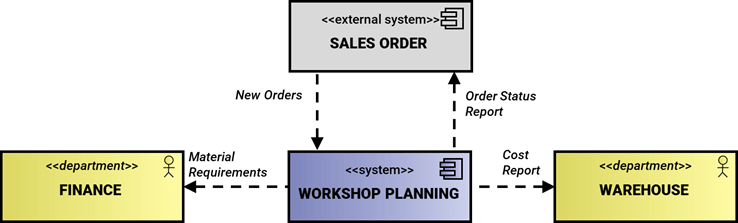
The Context View illustrates the interactions between a system and its surrounding environment. The surrounding environment may contain several elements that interact with the system, including, but not limited to, actors, roles, or other systems. The relationships in this view represent interactions that often describe the flow of information into and out of the system.
This provides an overview of the system, its boundaries within the business technology landscape, and its interactions with key users, organizations, and other systems.
PRACTICAL USAGE
When planning a solution, the architect needs to understand dependencies in the surrounding environment and communicate the concept of the solution to other stakeholders. The Context View is ideal since it describes the solution without going into technical details and facilitates the architect in the following areas:
- Starting Point for Design
Provides the initial starting point for discussions with other architects and stakeholders. The view supports collaboration between stakeholders and the exploration of the services and functions provided by the system. - Common Understanding
Gaining a common understanding of the system context among stakeholders is essential. The Context View can be easily understood by all stakeholders and serves as a basis for reaching a collective agreement on the high-level design of a system. - Highlight Key Dependencies
Key dependencies in the surrounding environment are significant for the architect and influence architectural decisions. The nature of these dependencies can determine how the architecture is formed. - Foundation for Integration Design
Interactions between the system and other systems provide the foundation for designing integration specifications. The architect can identify information flows at an early stage in the design process and assess opportunities or limitations on the architecture. - Facilitates Domain Thinking
It is useful for the architect to separate system design in terms of internal and external influences. The system can be thought of as operating within a domain that encapsulates it, ensuring that changes to the system are isolated within the domain. The Context View supports the illustration of the system domain’s boundaries, showing the external influences on the system.
STAKEHOLDERS
Strategic Stakeholders
Strategic stakeholders have an interest in understanding the business impact of introducing or changing a system. The Context View can support these stakeholders in making investment decisions and managing change.
Business Stakeholders
It is essential that business stakeholders understand the effect of introducing or changing a system on business operations. They need to be aware of changes required in processes or the organizational structure of the business. The introduction of new technology may open new opportunities for business stakeholders or place limitations on certain parts of the business. The Context View aids these stakeholders in analyzing the effect on business operations.
Product Stakeholders
The product stakeholders of the system in question have a vested interest in understanding how their system will interact with the surrounding environment. This information is needed to specify the requirements for the system, identify important stakeholders critical to the successful development of the system, and support development planning. The Context View supports collaboration between the product stakeholders of different systems and facilitates the planning of development.
Development
The stakeholders developing the system have an interest in the system’s boundaries and key interactions. This assists development teams in constructing system functions and considering implementation aspects such as security. The Context View helps to illustrate these key interactions.
EXAMPLE:
RELATED VIEWS
- Business Technology Landscape
REFERENCES AND FURTHER READING
- 4+1 View Model of Architecture, Philippe Kruchten (1995)
- C4 Model, Simon Brown [link]

The Architecturality View Library by Stephen Dougall is licensed under a Creative Commons Attribution-NonCommercial 4.0 International License.
 Architecture Mindset