➔ VIEW LIBRARY ➔ TACTICAL VIEWS

DESCRIPTION
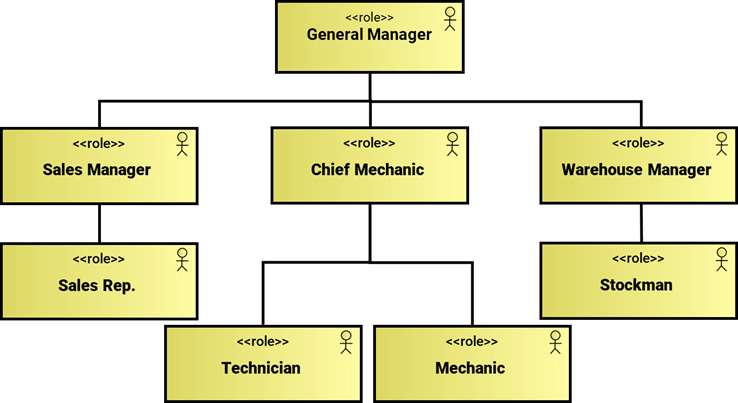
The Organization View represents the hierarchical structure of an organization. It includes actor elements, which may symbolize organizational units, roles, or individuals. Examples of organizational units include departments, offices, or product teams. The type of actor can be specified in the element stereotype. Each actor should include a description outlining their role and responsibilities.
Actors are linked through “reports to” relationships, illustrating the reporting structure between them. This view forms a tree structure, clearly outlining the chain of command within the organization.
PRACTICAL USAGE
Understanding an organization’s structure offers key insights for the architect from several perspectives. The Organization View serves as a starting point for understanding the people within the organization. It helps the architect navigate complex political relationships and understand the roles necessary for the organization’s operation. The following are key areas where this view supports the architect:
- Political Landscape
The Organization View provides a basis for understanding the relationships between different actors within the organization. This offers the architect insight into the political structures, enabling engagement with the appropriate stakeholders on relevant topics. - Decision-Making
When shaping an architecture, the architect relies on decisions from stakeholders that influence design. The Organization View helps the architect analyze and understand the chain of command, facilitating conflict avoidance and enabling effective communication with key decision-makers who can support the successful implementation of the architecture. - Roles and Responsibilities
To design an effective architecture, the architect needs to gather information from various stakeholders across the organization. By using the Organization View, the architect gains knowledge about roles and responsibilities, supporting the establishment of reference groups and streamlining communication on architectural topics with the right stakeholders.
STAKEHOLDERS
Strategic Stakeholders
The key roles in the organization required to form a coherent strategy and execute it are of significant interest to strategic stakeholders. These stakeholders need to define and understand the roles and reporting structures for effective planning and steering of the strategy. The Organization View aids these stakeholders in illustrating the organizational structure.
Business Stakeholders
Business stakeholders play a crucial role in defining and communicating structures and roles within the business. These structures form the foundation for executing a strategy, with roles carrying responsibility and accountability for results. Clarifying the organizational structure helps business stakeholders assess required skills and identify individuals or teams for key roles.
Product Stakeholders
The organization of product or project teams is essential to developing successful products. Product stakeholders need to define and communicate the structure and roles within product teams and assign individuals to these roles. The Organization View provides clarity on team structures and the responsibilities of individuals assigned to roles.
Additionally, product stakeholders need awareness of the broader business organization surrounding the product. This insight provides valuable information about the key stakeholders involved in business capabilities and processes that the product will support. These stakeholders can make significant contributions to requirements gathering and product design.
Development
Stakeholders working in product teams within development and engineering need to understand the team structure, chain of command, and their own responsibilities. The Organization View illustrates the team structure and the roles of these stakeholders, a clear understanding of the reporting structure.
EXAMPLE:
RELATED VIEWS
- –
REFERENCES AND FURTHER READING
- IASA BTABoK, Engagement Model – Organisation [link]
- Shafritz, J. M., Ott, J. S., & Jang, Y. S. (2015). Classics of Organization Theory. Cengage Learning.

The Architecturality View Library by Stephen Dougall is licensed under a Creative Commons Attribution-NonCommercial 4.0 International License.
 Architecture Mindset