➔ VIEW LIBRARY ➔ TACTICAL VIEWS

DESCRIPTION
The Conceptual Information Model offers a view of an organization’s information structure from a business perspective. It presents the information structure in a way that is understandable to non-technical stakeholders.
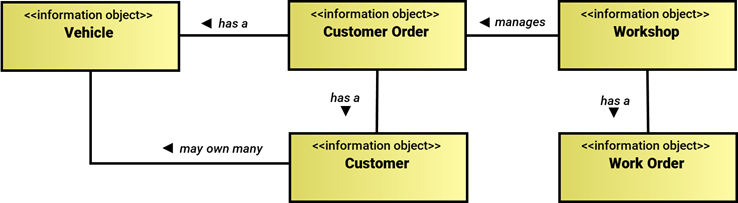
The view consists of information object elements, which represent definitions of information that are key to the business. These information objects are connected by association relationships, where each relationship has a text description and a direction, making the diagrams easily readable.
The nature of the relationship is provided in the text description, for example, “has a”, “contains many”, or “is part of”, while the direction indicates the target of the relationship.
PRACTICAL USAGE
This view aids the architect in understanding the information structure within the business and can help align information structures with technologies. This provides a valuable foundation for communication. The Conceptual Information Model helps the architect in the following areas:
- Common Language
Provides a common language and understanding of the information structure. This is useful in achieving a uniform language for requirements, design, user interfaces, and other documents describing the architecture. It facilitates communication with all stakeholders. - Foundation for Data Modeling
Data models for specific products can use this view as a basis for design. It provides both a starting point for data design and facilitates the alignment of products with the business information structure. - Identification of Master Data
Analyzing the Conceptual Information Model can aid the architect in identifying master data within the organization. This refers to data that is core to the business, typically stable and non-transactional.
STAKEHOLDERS
Business Stakeholders
Business stakeholders have a vested interest in creating a uniform information structure within the business to ensure effective communication. This view assists these stakeholders in expressing business requirements in a consistent manner and facilitates the alignment of the information structure used by people, processes, and technologies.
Product Stakeholders
The Conceptual Information Model can be used to analyze which information a product will interact with. This provides product stakeholders with the basis for describing system requirements and serves as a blueprint for terms and data structures used in the product. This helps these stakeholders align their product with the business.
Development Stakeholders
During the design of user-centric functions, the Conceptual Information Model can help ensure that user interfaces maintain uniform terminology. This helps address usability concerns that development and engineering stakeholders face. The model serves as a blueprint for these stakeholders when designing data models and provides context for data structures. This aids interoperability with other systems in the business.
EXAMPLE:
RELATED VIEWS
- Domain Model
- Relational Data Model
REFERENCES AND FURTHER READING
- Open Group, Archimate – Business Object [link]

The Architecturality View Library by Stephen Dougall is licensed under a Creative Commons Attribution-NonCommercial 4.0 International License.
 Architecture Mindset